Boat Rental Payment Processing: How to Get Paid on the Water
How boat rental payment processing works, from booking authorization and deposits to refunds, chargebacks and PCI security, and how to set up stable processing.
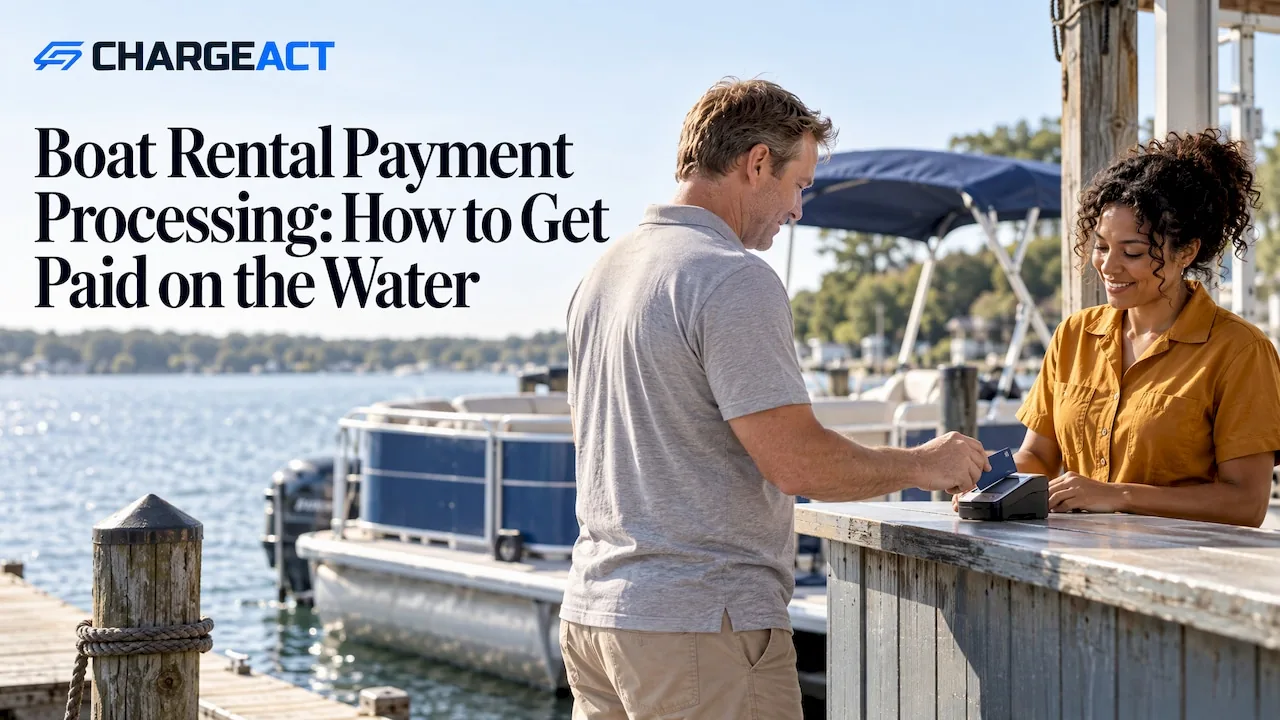
Boat rental payment processing is a seasonal, deposit-heavy, weather-dependent business model that a generic processor was never built around. You take bookings weeks ahead, hold deposits, refund trips that storms cancel, and see your volume jump on a few holiday weekends. A merchant account structured around that rhythm, with a dedicated account manager who knows your calendar, keeps cash flowing when a processor would otherwise freeze or reserve your funds. This guide covers how the payment flow works, where it breaks, and how to set it up so it holds under peak-season pressure.
Keep Boat Rental Payments Moving
ChargeAct tailors payment processing for seasonal businesses, with a dedicated account manager focused on risk management and operational stability.
Get A QuoteTL;DR
- A boat rental payment moves through four stages: authorization at booking, a hold or deposit, capture at or after the trip, and settlement to your bank. Each stage can fail on its own.
- Seasonal spikes, large tickets and weather cancellations are the patterns that make processors freeze accounts or hold funds, so your setup should anticipate them.
- Clear written cancellation terms, an electronic record of every transaction and a documented damage process are your best protection against chargebacks.
- Keep card data off your own systems by using a PCI DSS-compliant payment page, and confirm your booking software uses one.
- Pricing is quoted per business. Ask for a quote built on your own volume and ticket size.
Table of Contents
- Why boat rentals strain a standard processing setup
- How a boat rental payment actually moves
- Taking payments online, by phone and at the dock
- Deposits, balances and security holds
- Cancellations, weather and refunds
- Chargebacks: prevention beats the fight
- Card security and PCI compliance
- Connecting payments to your booking software
- Planning for peak season
- Payment processing built for boat rental operators
- FAQ
- Sources
Why boat rentals strain a standard processing setup
Most small businesses process a steady stream of low-value sales. A boat rental business looks different on paper. A pontoon day rental might be a few hundred dollars, a multi-day yacht charter several thousand, and a single July weekend can bring in more than a quiet month in March. Add card-not-present bookings made online or by phone months before the trip, and a processor's automated risk system sees a pattern it did not expect.
The typical consequences are familiar to owners who have lived through them: a sudden review right when the season starts, a rolling reserve that ties up working capital, or an account that is limited after one run of chargebacks. The cause is rarely fraud. It is a mismatch between how the account was underwritten and how the business actually earns.
This is why underwriting based on your real operations matters more than a category label. When the processor understands that your volume peaks from May through September, that bookings come in advance, and that you collect deposits and damage holds, it can set expectations accordingly instead of reacting to a spike it never saw coming. That is the approach we take: personalized underwriting built on how your business actually runs, a dedicated account manager, and backup placements designed to keep you operating if something changes.
How a boat rental payment actually moves
It helps to separate the flow into stages, because each one has its own failure points.
Authorization. When a customer books, your system asks the card issuer whether the card is valid and has enough available credit. If it does, the issuer places a hold on that amount. No money has moved yet. Booking marketplaces commonly work this way: one major platform's help page describes a preauthorization hold at the time of request, with the card charged only once the owner accepts and the hold released if the booking is declined or expires.
Capture. Capture is the moment the held amount becomes a real charge. You might capture at booking, at check-in or after the trip. Many operators charge a deposit at booking and capture the balance before departure.
Settlement. The processor batches captured transactions and sends the net amount to your business bank account, minus processing fees. How quickly this happens depends on your merchant agreement and your risk profile, which is one more reason to discuss timing during setup rather than after the first payout surprise.
Reconciliation. Finally, your bookkeeping has to match what the bank received against what you booked, including refunds, adjustments and fees. Clean transaction records at this stage are also what you will lean on if a dispute arises.
The key point is that these stages are separate decisions. Choosing when to capture, how long to hold and what to refund is a business policy, and your processing setup should support it rather than dictate it.
Taking payments online, by phone and at the dock
Boat rental customers book in three ways, and a complete setup covers all of them.
Online. Most bookings arrive through your website or a booking widget. This needs a payment gateway, the software layer that passes card details securely from the checkout page to the processor. We offer online payment processing and gateway integration support for ecommerce stores, so your booking page connects cleanly to your merchant account.
By phone. Repeat customers, corporate outings and charter inquiries often end with a phone call and a card number read aloud. That is a mail order/telephone order transaction, known as MOTO, and it carries different risk because the card is not physically present. Running it through a proper virtual terminal, rather than typing numbers into an unrelated tool, keeps the transaction on record and tied to your account. See our MOTO payment processing page for how it works.
At the dock. Walk-ups, fuel add-ons and final balances are collected on site. A mobile card reader or a POS system lets staff take payment at the slip or on the water, where signal and sun glare are real constraints. Digital wallets such as Apple Pay and Google Pay are quick for customers standing on a dock, and are part of our digital payments offering.
Running all three channels through one merchant account matters. It gives you one set of reports, one point of contact and one risk profile, instead of three tools that do not know about each other.
Deposits, balances and security holds
The payment structure you choose is the biggest lever on both cash flow and dispute risk. Three common models work well for boat rentals.
A deposit plus balance model charges a portion at booking and the rest before departure. It secures the date and keeps your exposure to cancellations modest. A full prepayment model captures everything at booking, which suits peak weekends and charters but makes your refund policy more important. A hold-and-capture model authorizes the full amount at booking and captures it later, which is common for short-notice rentals.
Security deposits for damage, fuel or cleaning are a separate question. You can place an authorization hold for the deposit amount and release it after the boat is returned, or capture only what a documented claim requires. Two practical points. First, authorization holds do not last forever: card networks release them after a set period, so a hold placed at booking for a trip weeks away may expire before you need it. Authorize closer to the trip date for long lead times, or charge a deposit instead. Second, a partial capture generally closes out that authorization, so decide the amount before you capture.
When deposits cover damage, your insurance position matters as much as your card terms. A plain-language boat insurance coverage guide explains how valuation and coverage work, which helps you set security deposit amounts that are realistic rather than arbitrary.
Whatever model you choose, write it down and show it at checkout. A customer who has clicked to accept a clearly stated deposit and damage policy is far harder to see as a dispute than one who is surprised by a charge.
Cancellations, weather and refunds
Weather is the defining feature of boat rental payments. A trip canceled for wind or lightning is not the customer's choice, and it is not really yours either, so your policy has to say in advance what happens: a full refund, a reschedule credit, or a partial refund if a trip is cut short.
The strongest policies share a few traits. They use simple language, they appear before payment rather than buried in a footer, they separate customer-initiated cancellations from operator or weather cancellations, and they state timing, such as how many days before the trip a refund is available. Refund the original card rather than paying out by another route, because a credit that returns to the same card leaves a clean record and reduces the chance the customer disputes the charge instead.
If you want a starting point for the wording, these cancellation fee policy templates and booking workflow show how to structure written terms and a checkout acknowledgement so customers agree before they pay. Adapt the language to your own trips, and have your attorney review it before you publish it.
Process refunds promptly. A customer waiting on a refund is a customer who calls their bank. Setting an internal rule that every refund is issued within a few business days of approval removes one of the most avoidable dispute triggers.
Chargebacks: prevention beats the fight
A chargeback happens when a cardholder asks their bank to reverse a transaction. For boat rentals, the common causes are a customer who does not recognize the charge, a dispute over a damage fee, a trip that did not happen, and a cancellation the customer believes should have been refunded. Because the merchant generally bears responsibility for disputed transactions, and cannot rebut them without a solid record, prevention is mostly about documentation.
Build a file for each rental. It should include the signed or accepted rental agreement, the cancellation terms shown at booking, the booking confirmation email, the time and date of the transaction, photos of the boat before and after, and any messages about changes. When a dispute arrives, this is the evidence package that supports your case.
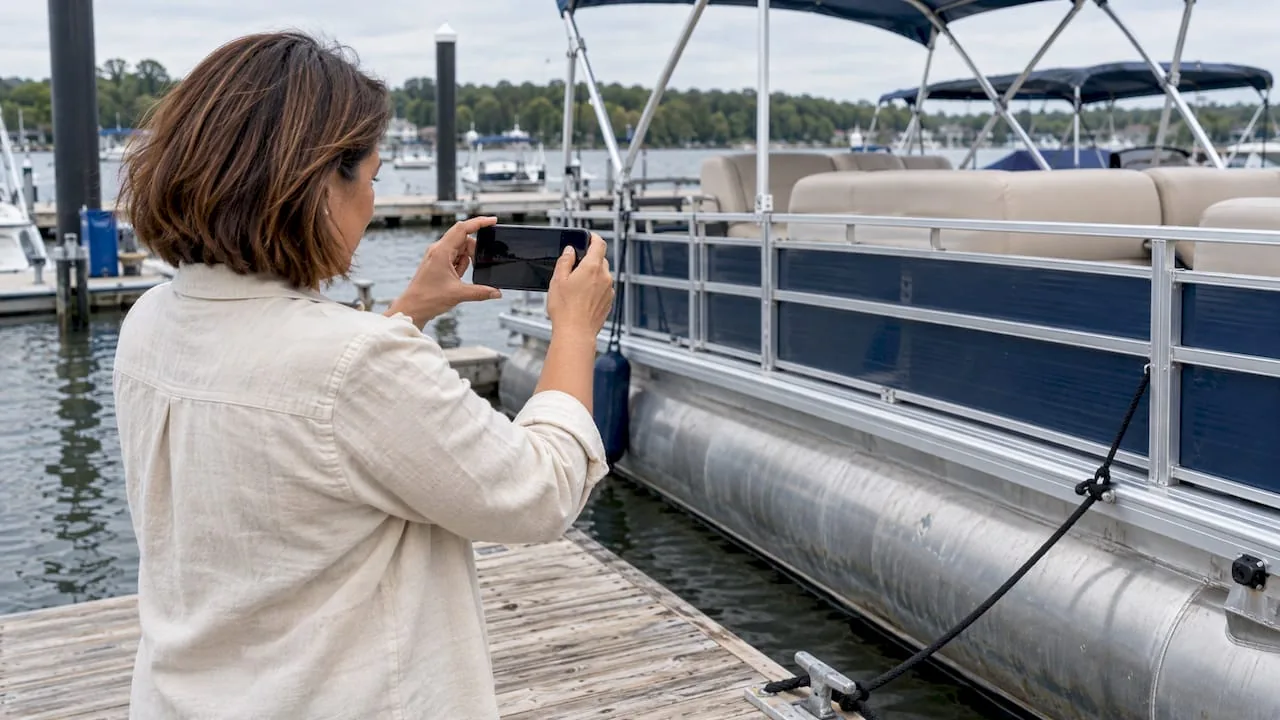
Two more habits help. Use a clear billing descriptor, the name that appears on the customer's statement, so people recognize your business name rather than a processor code. And separate charges: a deposit, a balance and a damage fee should each appear as distinct, explained line items.
This is also where tooling earns its keep. Our fraud prevention and chargeback protection tools and chargeback defense service are built for exactly this stage, and a dedicated account manager gives you someone to call when a pattern starts to emerge, before it becomes a threshold problem.
Card security and PCI compliance
Any business that accepts cards has to protect cardholder data under the Payment Card Industry Data Security Standard, known as PCI DSS. The simplest way to stay in a light compliance category is to never handle card data yourself. The PCI Security Standards Council's SAQ A self-assessment, for card-not-present merchants, assumes that you outsource all account-data handling to a PCI DSS-compliant provider, that the payment page elements come directly from that provider, and that your site is not susceptible to script attacks. Computer-system requirements still apply to the web page that hosts a redirect or embedded payment form.
In practice that means three things for a boat rental. Use a hosted or embedded payment form rather than building your own card fields. Keep your booking website patched and limit who can edit its pages. And if staff write down card numbers during phone bookings, the same document says paper records must be kept to a minimum, with documented retention periods and verified secure deletion at least every three months. Taking phone payments directly into a virtual terminal avoids the paper problem altogether.
Card brands also publish their own rules for the merchants who accept them. American Express, for example, issues a Merchant Operating Guide for merchants with an agreement to accept its cards, and updates it periodically. Your account manager can walk you through how the brand rules apply to your setup.
Connecting payments to your booking software
Most boat rental businesses run a booking or fleet-management system, and the connection between it and your merchant account is where many problems start. Before you commit to either side, check the following.
First, confirm that the booking system uses a PCI DSS-compliant payment page, with payment elements coming directly from the processor, as the SAQ A requirements describe. Second, confirm it supports the capture model you chose: deposit and balance, delayed capture, partial refunds and a separate damage charge. Third, check that transaction data flows back to your reports so reconciliation does not mean retyping. Fourth, ask how the system handles a failed or expired authorization, because that is what a late-season rebooking will test.
If your software and processor do not talk to each other well, the fix is usually a gateway integration. We provide gateway integration support for ecommerce stores, so your site, your booking tool and your merchant account work as one flow.
Planning for peak season
The most expensive payment problems happen in the busiest weeks. A few planning steps reduce the odds.
Tell your account manager about your season before it starts, including expected busy weekends, special events, new boats added to the fleet and any change in average ticket. A processor that has been told to expect a July spike treats it as normal. One that has not may treat it as an anomaly.
Keep a backup path. A second placement, ready in advance, means a single processing issue does not stop bookings. Backup placements are part of what we build for merchants whose volume or category makes them a target for sudden changes.
Watch your own numbers: refund rate, dispute rate and average ticket. Reviewing them monthly during the season lets you spot a trend, such as a spike in weather refunds, and adjust your policy before the bank does it for you.
Finally, know your pricing structure. We use transparent interchange-plus pricing, where the card network's cost is passed through and our margin is stated separately, so you can see what each part of the fee is. Rates depend on your business, so request a quote from our sales team for your specific volumes and ticket sizes.
Payment processing built for boat rental operators
If you run a rental fleet and your current processor has frozen funds, imposed a reserve or simply does not understand your seasonal pattern, we can help. We offer merchant accounts tailored to your risk profile, online, phone and in-person payment acceptance, fraud protection and chargeback defense, all supported by a dedicated account manager who learns how your business operates. You can review the full range on our solutions page, or look at the merchant account services that sit behind them.
Approval depends on underwriting for each business, and pricing is quoted individually. Talk to our sales team about your fleet, your season and your average booking, and we will put together an option built around them.
FAQ
Do I need a special merchant account for a boat rental business?
You need a merchant account that fits how you take payments: online bookings, phone orders, deposits and balances, and seasonal peaks. Underwriting that looks at your real operations, not only your category, is what keeps the account stable. We tailor merchant accounts to each business's risk profile, and approval is decided case by case.
When should I charge the customer for a boat rental?
It depends on your policy. Many operators charge a deposit at booking and the balance before departure, while others authorize the full amount and capture it later. Whichever you choose, show the terms at checkout and get the customer's acceptance before they pay.
How do I take a damage deposit on a card?
Place an authorization hold for the deposit amount, then release it after the boat is returned or capture only the documented amount. Holds expire after a limited period, so for bookings made far ahead, authorize closer to the trip date. Record the condition of the boat before and after each rental.
Can I take boat rental payments over the phone?
Yes. Phone bookings are processed as MOTO transactions through a virtual terminal. Entering the card details directly into the terminal keeps a complete electronic record and avoids storing card numbers on paper.
How much will processing cost?
Costs vary with your volume, average ticket and risk profile, so we do not publish rates. Contact our sales representatives for a quote built around your specific business.
Sources
- PCI DSS SAQ A, Data Security Standard (PCI Security Standards Council, January 2025)
- American Express Merchant Operating Guide (April 2026)
- How and when do I pay for a boat rental? (help page, August 2020)
Recommended
How it works
Call us
Tell us where things stand today - your current processor, your rates, and what's not working.
We review where you stand
A real underwriter looks at your statements and account history - no black-box scoring.
You hear what's possible
We lay out your options in plain terms, including what we can and can't do for your business.
Why ChargeAct
We underwrite the businesses others decline
High-risk isn't a dirty word to us - it's the merchant category we specialize in every day.
A human reviews your account, not just an algorithm
Statements get read by people who understand your industry, not auto-rejected by a risk score.
A dedicated manager who knows your account
When something comes up, you call a person who already knows your business - not a queue.
Stop guessing what your processor will do next.
Talk to a real underwriter about where your business stands - no obligation, no runaround.
(888) 329-5717