Nutraceutical Merchant Account: How to Get Approved and Stay Live
What a nutraceutical merchant account is, why supplements are labeled high risk, what underwriters ask for, and how to keep processing stable after approval.

A nutraceutical merchant account is a card-processing account opened in your business’s name with an acquiring bank that has reviewed your supplement business and agreed to settle your sales. Most general-purpose processors treat supplements as high risk, so the account you need is usually a high-risk merchant account, underwritten around your real operations: your billing model, your claims, your refund and chargeback history, and your volume. Get that match right and processing is boring, which is the goal. Get it wrong and you face a freeze, a reserve you did not expect, or a termination in the middle of a growth month.
This guide walks through how nutraceutical payment processing works, what underwriters look at, the terms to expect, the U.S. rules that touch your checkout, and how to keep an account stable once it is live.
TL;DR
- Supplements are commonly classed as high risk because of recurring billing, high chargeback exposure and regulated product claims, so a standard account often ends in a hold or termination.
- Underwriters want to see your business model, product and label compliance, billing disclosures, refund policy and processing history before they approve you.
- Expect risk-based pricing and possibly a rolling reserve; commonly quoted ranges are a 4% to 6% discount rate on continuity volume and a 5% to 15% reserve held for 90 to 180 days.
- Card-network chargeback programs, including Visa’s VAMP, can trigger fines or termination, so fraud tools and dispute handling should be added to be a part of the account.
- ChargeAct builds supplement merchant accounts around a dedicated account manager and backup placements, so one decline does not stop your revenue.
Table of Contents
- What a nutraceutical merchant account actually does
- Why supplements are treated as high risk
- What underwriters ask for
- Fees, reserves and terms to expect
- U.S. rules that touch your checkout
- Setting up supplement ecommerce payments
- Keeping the account stable after approval
- Perspective: why we underwrite the business, not the label
- How ChargeAct supports supplement merchants
- FAQ
- Sources
What a nutraceutical merchant account actually does
A merchant account is the bridge between your checkout and the card networks. When a customer pays for a bottle of magnesium or a 90-day subscription to a greens powder, the gateway captures the card data, the processor routes the authorization, and the acquiring bank settles the funds to you minus fees. The merchant account is the agreement under which that bank takes on the risk of your transactions.
That last part is the key. The bank is underwriting you. It is promising the card networks that it will cover disputes and fines if you cannot. So the question it asks is not whether your product is good, but how likely your sales are to turn into chargebacks, refunds and regulatory trouble. For nutraceuticals, banks tend to answer cautiously, and that is why a specialized account exists.
If you want the broader picture first, our explainer on what a high risk merchant is covers how the label works across industries.
Why supplements are treated as high risk
The label rarely says anything about your ethics or product quality. It reflects patterns the banks see in the category. Four show up repeatedly.
Recurring billing. Many supplement brands grow on subscriptions or free-trial offers. Customers who forget they signed up dispute the charge instead of canceling, and disputes are what banks fear most. Each one costs you the sale, a fee, and a point on your ratio.
Chargeback ratios. Card networks run monitoring programs for merchants whose disputes climb too high. Visa’s VAMP tightened the U.S. merchant excessive threshold to 150 basis points (1.50%) on 1 April 2026, with at least 1,500 fraud and dispute events required, while Mastercard’s excessive tier begins at 100 to 299 chargebacks and a 1.50% to 2.99% ratio. Cross a line and you can face fines, mandatory remediation, or loss of the account. Our write-up on VAMP and excessive chargebacks explains the mechanics in plain terms.
Regulated claims. Supplements can make structure and function claims, but the rules are specific, and regulators can act on misleading marketing. Banks do not want to inherit that exposure.
Marketing practices. Free-trial funnels, aggressive upsells and affiliate traffic raise the odds of customers who feel misled. Underwriters read your funnel, not just your product page.
A useful way to think about it: the category is not rejected, it is priced and monitored. A processor that understands the vertical will approve you with sensible controls. A processor that does not will approve you on a generic profile and then freeze you when your numbers behave like a supplement brand’s numbers.
What underwriters ask for
Documentation varies by bank, but a supplement application is typically reviewed on the same core themes. Having them ready shortens the approval timeline and lowers the odds of a surprise condition.
Start with the basics: business registration, EIN, a business bank account, and ID for the owners. Add your website, which should be live and complete, with clear contact details, a refund and return policy, shipping terms, privacy policy and terms of sale.
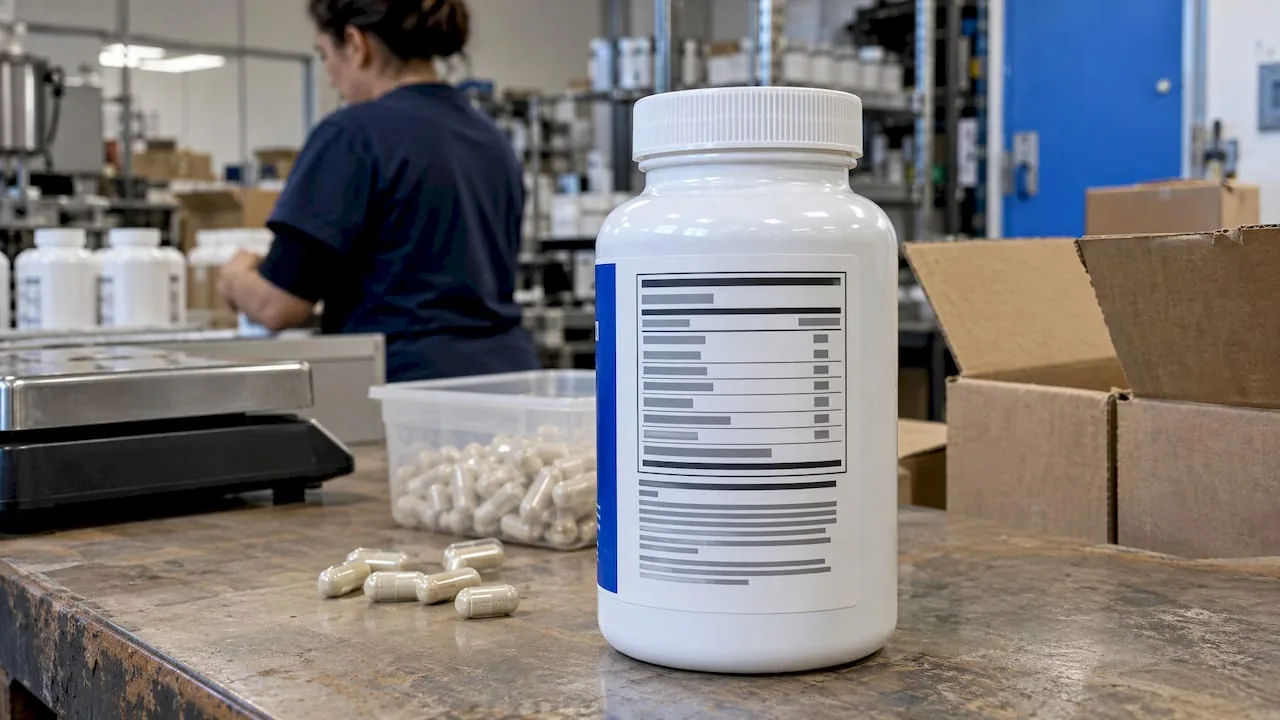
The website selling the product should either list the ingredients on each product page or provide an image of the back label, so you don’t need to manually enter the ingredient details.
Then expect questions about your operations. Where is the product manufactured, and by whom? Who ships it? What is your average order value, your monthly volume, and your expected peak? What share of sales is recurring versus one-time? Underwriters also ask for recent processing statements, usually three to six months, so they can see approval rates, refund rates and chargeback ratios in the real numbers.
Finally, they check compliance. Your labels and marketing should line up with FDA rules. According to an academic review of supplement labeling, labels must identify the product as a supplement, list the manufacturer, packer or distributor with an address, list all ingredients, and carry a Supplement Facts panel with serving size and amounts. If you make a structure or function claim, the label needs the standard disclaimer that the statement has not been evaluated by the FDA and the product is not intended to diagnose, treat, cure or prevent any disease, and the manufacturer must notify the FDA within 30 days of first marketing the claim.
Health claims in advertising also need support. Guidance summarized by one industry source says the FTC expects competent and reliable scientific evidence, which typically means at least one well-designed human clinical trial. If your site claims a supplement lowers cholesterol or reverses aging, an underwriter may ask what backs that up. Keep your substantiation file where you can produce it quickly, and review your site copy before you apply.
Fees, reserves and terms to expect
High-risk accounts are priced for risk, so the terms differ from a standard small-business account. Here is how to read them.
| Term | What it means | What to expect |
|---|---|---|
| Processing rate | The percentage you pay on each transaction | Commonly quoted at 4% to 6% on nutra continuity volume; ours is interchange plus, aligned to your volume |
| Rolling reserve | A share of daily volume held back as a cushion against disputes | Commonly 5% to 15% held for 90 to 180 days |
| Setup fee | One-time cost to open the account | Varies by provider and risk profile |
| Chargeback fee | Per-dispute charge | Set in your agreement |
| Processing cap | Monthly volume limit | Set at approval based on your projections |
The rate and reserve figures above come from an industry breakdown of high-risk reserve structures that notes nutraceuticals are among the verticals facing the highest reserve demands. Treat them as ranges to benchmark against, not guarantees, since each bank sets its own terms.
Reserves deserve a closer look because they affect cash flow more than any rate. Picture a brand processing $100,000 a month with a 180 day rolling serve at 10%: $10,000 is withheld each month, and each month’s holdback is released six months later. In the first half-year that is a meaningful amount of working capital sitting with the bank. A reserve is negotiable in size and duration, and it often shrinks as your processing history proves stable. We cover how they work, and how to negotiate them, in the truth about rolling reserves.
Two more terms to read before you sign: the processing cap, because a viral month can push you over it and trigger a hold, and the termination clause, because it determines how much notice you get and how quickly your reserve is released if the relationship ends.
U.S. rules that touch your checkout
Several rules sit between your product and your payments. Some are about the product, others about how you charge.
If you sell by subscription or free trial, the FTC’s Negative Option Rule (16 CFR Part 425) is the one to know. According to the FTC’s published rule, sellers must clearly and conspicuously disclose material terms before collecting billing information, get the consumer’s express informed consent to the negative option feature before charging, and provide a simple way to cancel that immediately halts charges. In practice, that means the terms of the trial and renewal sit next to the payment button, the customer ticks or clicks something specific to agree, and canceling is as easy as signing up.
This is also your best chargeback defense. A customer who understood the renewal, can cancel in one step and gets a clear receipt has little reason to dispute. For a deeper dive on how stable billing and dispute prevention connect, see our fraud prevention and chargeback protection page.
On the product side, keep labels and claims consistent with the FDA requirements covered above, and make sure your website claims match your labels. Underwriters often compare the two.
Compliance questions about a particular claim or ingredient belong with a regulatory attorney who works with dietary supplements. A processor can tell you what a bank will accept, but not whether a claim is legal.
Setting up supplement ecommerce payments
Once the account is in place, the checkout is where approval rates are won or lost. A few decisions matter most.
Gateway fit. Your gateway should connect to your storefront or subscription tool, support tokenization for recurring billing, and route to more than one acquirer if your processor offers backup placements. If a single bank pauses your account, a second one can keep the checkout running while the issue is resolved. This is the practical meaning of operational stability.
Billing logic. Recurring supplements live or die on retry and dunning rules. Failed renewals are often a card expiry or a soft decline rather than a lost customer, so smart retry timing and account-updater tools recover revenue that would otherwise leave as involuntary churn. That recovery shows up directly in your MRR and customer lifetime value.
Fraud screening. Supplements attract card testing and stolen-card orders, particularly on cheap trial offers. Layer address and card-code checks, velocity limits, and device or IP signals, and tune them so you do not block real buyers. Over-aggressive screening hurts approval rates just as much as under-screening hurts chargebacks.
Descriptors and receipts. A billing descriptor customers recognize, plus an order confirmation email with support contact details, prevents the “I don’t know this charge” dispute. It is a small fix with an outsized effect on your ratio.
Payment methods. Cards are the core, but digital wallets reduce typing at checkout, which helps mobile conversion. If you also take phone orders for reorders or practitioner sales, ask about MOTO support so those sales run through the same account.
Keeping the account stable after approval
Approval is the start. Stability comes from habits.
Monitor your ratios weekly, not monthly. A dispute ratio that drifts toward 1% is a signal to act, because network thresholds are close and a single bad cohort of customers from one ad campaign can push you past them. Segment disputes by traffic source, offer and product to see where they come from.
Use alerts and pre-dispute tools where available so you can refund before a complaint becomes a chargeback. A refund costs you the sale; a chargeback costs you the sale, a fee and a mark against your ratio.
Tell your processor before volume spikes. A launch, a influencer push or a seasonal rush looks like fraud to a risk system that was never warned. A heads-up and a raised cap beat a freeze on your best sales day.
Keep your claims, labels and landing pages consistent. If you change the product, the offer or the funnel materially, tell your account manager. Surprises, not high-risk status, are what lead to terminations.
Finally, keep a backup in place. Merchants who lose a primary account without a second placement often wait weeks for a new one while sales stop. A backup turns that scenario into a routing change.
How ChargeAct supports supplement merchants
If you operate a nutraceutical or wellness brand and want to reduce processing costs, need backup or continuity payment options, prefer having a dedicated payment specialist to assist you, or have lost an account with a general-purpose processor, we can help you establish a reliable payment setup. Our nutraceutical merchant account for supplements is underwritten based on your actual business operations and includes a dedicated account manager, tailored risk management, and backup placement options to ensure stability.
We offer high-risk merchant accounts with fraud protection tools and gateway integrations for ecommerce and retail. Pricing is interchange plus and aligned to your volume. To start, see our payment solutions and tell us about your business.
FAQ
Is a supplement merchant account the same as a nutraceutical merchant account?
In practice, yes. Banks and processors use the terms interchangeably for businesses that sell vitamins, dietary supplements, herbal products and functional wellness items. What matters to the underwriter is your billing model, claims and processing history, not which word you use.
How long does approval usually take?
Timing depends on how complete your application is and how clean your documents are. A live website, clear policies and recent processing statements shorten review. Ask your provider for a realistic timeline for your risk profile rather than relying on a generic promise.
Will I need a rolling reserve?
Likely. High-risk accounts, especially those for subscription supplement businesses, often have reserves imposed. The bank sets the amount and holding period according to your assessed risk. However, reserves can be negotiated, and we strive to minimize or remove them as your processing track record is proved to be reliable.
What happens if my current processor freezes my account?
Funds may be held while the processor reviews your account. Sales can continue but beware that the funds from those sales will be held until a decision is reached on whether the account stays open or not. In the unfortunate event that the account is terminated, the held funds may be put on a release schedule. In this sort of event it's recommended to gather your recent statements, document your refund and dispute handling, and move quickly to open a new account. Having a backup placement ready beforehand avoids the gap.
Can I accept payments for supplements through a standard checkout tool?
Some general tools accept supplement sellers at low volume, but many restrict or review the category once volume or chargebacks grow. If supplements are your core business, an account built for the vertical gives you more predictable terms.
Sources
- Visa VAMP and Mastercard chargeback thresholds, Daily Intel Service
- High-risk merchant accounts for supplements, Daily Intel Service
- FTC Negative Option Rule
- Dietary supplement labeling requirements, AMA Journal of Ethics
- How to sell supplements online legally
Recommended
How it works
Call us
Tell us where things stand today - your current processor, your rates, and what's not working.
We review where you stand
A real underwriter looks at your statements and account history - no black-box scoring.
You hear what's possible
We lay out your options in plain terms, including what we can and can't do for your business.
Why ChargeAct
We underwrite the businesses others decline
High-risk isn't a dirty word to us - it's the merchant category we specialize in every day.
A human reviews your account, not just an algorithm
Statements get read by people who understand your industry, not auto-rejected by a risk score.
A dedicated manager who knows your account
When something comes up, you call a person who already knows your business - not a queue.
Stop guessing what your processor will do next.
Talk to a real underwriter about where your business stands - no obligation, no runaround.
(888) 329-5717